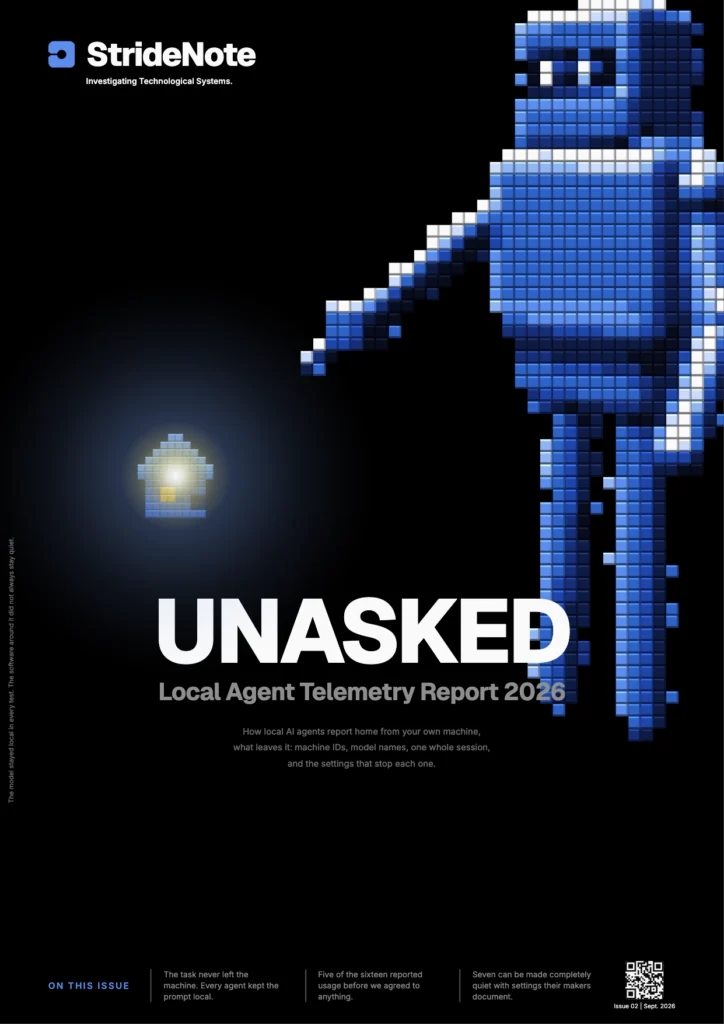
Investigating technological systems.
An independent research publication. We follow the stories, run the tools, read the code and publish the evidence.
How are the tools we use daily changing us?
Research, investigations, insights, builds and stories on the technology shaping how we live.
ListenNew investigations
All investigationsMLX vs llama.cpp in LM Studio: Qwen3.6 35B-A3B reads 20,000 tokens in 30 seconds, not 75
MLX vs llama.cpp in LM Studio on a 48 GB M4 Pro: Qwen3.6 35B-A3B read a 20,000-token prompt…
ReadAnthropic Economic Index: we opened the 86 files behind the reports
We opened the Anthropic Economic Index dataset on Hugging Face: 86 files, 763.4 MB, six releases. What one…
ReadWorld models explained: what Genie, Marble and Cosmos are, and which one you can download
World models explained from the makers' own pages: how DeepMind, World Labs and Nvidia define the term, what…
ReadPhysical AI explained: why it is not another word for robots
Physical AI is the intelligence that lets a machine perceive, decide and act. How Nvidia defines it, what…
ReadContinual learning: why your local model forgets everything you told it
Continual learning is the ability to keep learning after release. Today's models lack it, so a context window…
ReadCompute threshold: 10^25 in the EU, 10^26 in California and New York, and no model card that says
A compute threshold is 10^25 operations in the EU AI Act and 10^26 in California and New York.…
ReadTop sections
Investigations, insights and the evidence behind them
Every figure measured here, with the method stated and the dataset published beside it.
Go to ResearchModels and tools, run on our own machines
What a 48 GB M4 Pro can hold, what it costs in memory, and where each tool falls over.
Go to AIHumanoids, simulators and what the claims survive
Rules read, results checked against them, and the simulations run on hardware we own.
Go to RoboticsEditor's pick
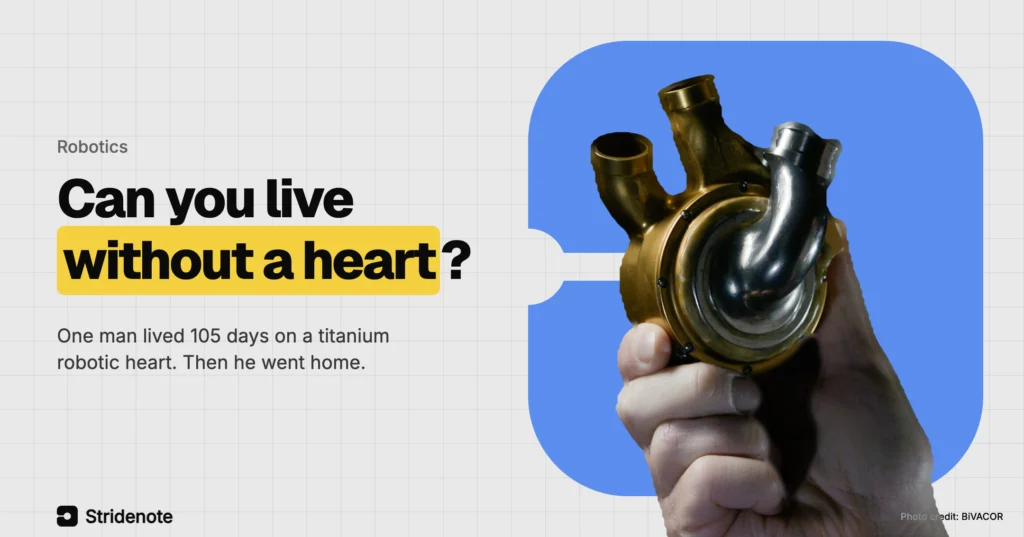
Can you live without a heart? A robotic heart says yes, and AI is next in line
Can you live without a heart? A robotic heart kept one man alive for 105 days with no heartbeat of his own. We read the record, and ask what AI…
How AI companies hide tracking code, from Claude Code to your local tools
AI tracking code hides in plain sight. We break down the covert tracker Anthropic shipped in Claude Code, the telemetry we found elsewhere, and how to catch it.
Brand voice for AI agents: the layer that beats a better model
We built a five-file brand voice for AI agents. Why the output spec, not the model, is the layer that decides how everything your agents write sounds.
OpenCode vs OpenJarvis: which local AI agent phones home?
OpenCode vs OpenJarvis: we captured what each one sends home. One has a working off switch. The other, the agent we use daily, has none we could find.
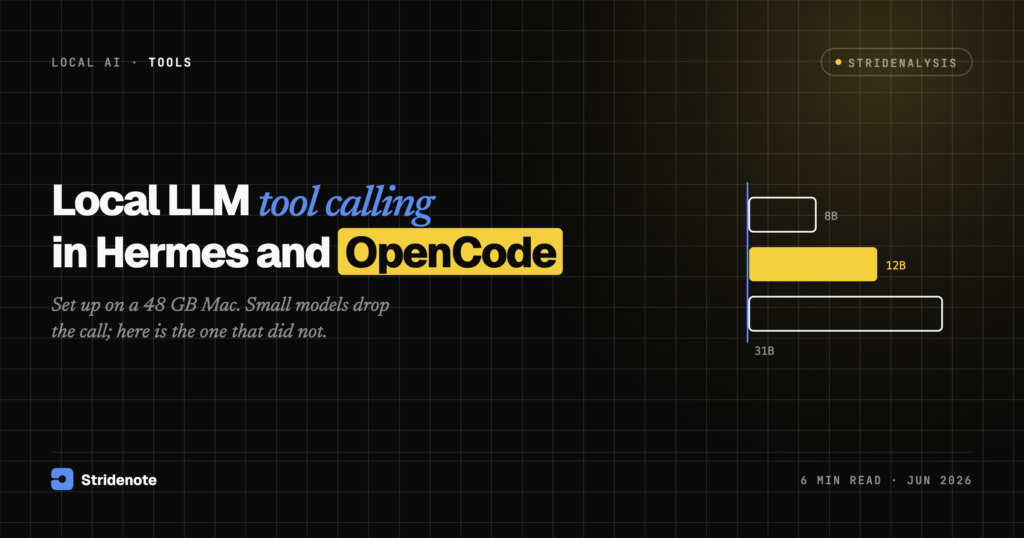
Set up local LLM tool calling in Hermes and OpenCode on a Mac
We set up local LLM tool calling in Hermes and OpenCode on a 48 GB Mac mini. Why small models drop tool calls, and the one model that actually worked.
Latest AI and robotics news
All news
Anthropic discloses a fourth case of a Claude model reaching real systems in a test
Anthropic's alignment assessment discloses a fourth incident of a Claude model reaching real systems during testing, found by scanning 481 million transcripts.
Sanders and Casar announce the Ban Artificial Superintelligence Act
Meta releases Muse Spark 1.3 to developers and lists an open weights release
Pi coding agent adds GPT-6 Astra two days after OpenAI’s launch
Nous Research makes Bot Mode the default in the Hermes Agent desktop app
Tested AI tool guides
All guides
Install and run MuJoCo on Mac: tested on an M4 Pro
Kokoro TTS on a Mac: install, speed on an M4 Pro, and automatic article narration
Share Claude Code skills with OpenCode, Hermes Agent and Pi from one folder
Hermes Agent local models on a Mac: setup, file locations and the button that changes your default
Why your local model stops at exactly 8,192 tokens
Two agents on one LM Studio endpoint: what concurrent requests cost
The telemetry reports
What local AI tools and coding agents send from your machine, captured on our own hardware and published with the data.
All reports